Key takeaways
- The base metal and the finish are one decision, so name both in the brief.
- PVD is a thin surface film and electroplating is a metal layer from a bath; both can wear through where a piece rubs.
- Plating thickness is one range across both methods, so the reading on your sample is the figure that counts.
- Check color, thickness, surface and test scope on the sample before the bulk run starts.
A finished piece is a base metal plus a finish, and the two choices affect each other. A brand that picks the finish first and the metal second often finds that the metal decides how long the finish lasts and what it costs.
Which base metals can a brand order?
The base metals on offer are stainless steel, brass and 925 silver. The stainless steel grade listed is 316L. Earring posts come in titanium, stainless steel or 925 silver, so the post metal is a separate line in the brief.
A custom order starts at 100 pieces per style in stainless steel, 100 in brass and 100 in 925 silver. Because the minimum is the same in all three, the choice rests on look, finish and price, not on the order size.
How do the metals and finishes usually pair?
This is common trade practice, not a promise about any single style; the quote names the exact combination for yours.
| Base metal | Finish it usually carries | What to watch |
|---|---|---|
| Stainless steel | PVD gold, or left unplated and polished | Hard and corrosion resistant, so the base holds up; the gold film on top is what wears |
| Brass | Electroplated gold or another plated color | Bare brass darkens over time, so the plating is doing most of the work |
| 925 silver | Often left unplated | Sterling silver can tarnish and usually costs the most of the three |
In stainless steel jewelry wholesale orders, a silver look is commonly just polished steel with no plating. Brass jewelry is usually sold plated, for the reason in the table.
What is the difference between PVD and electroplating?
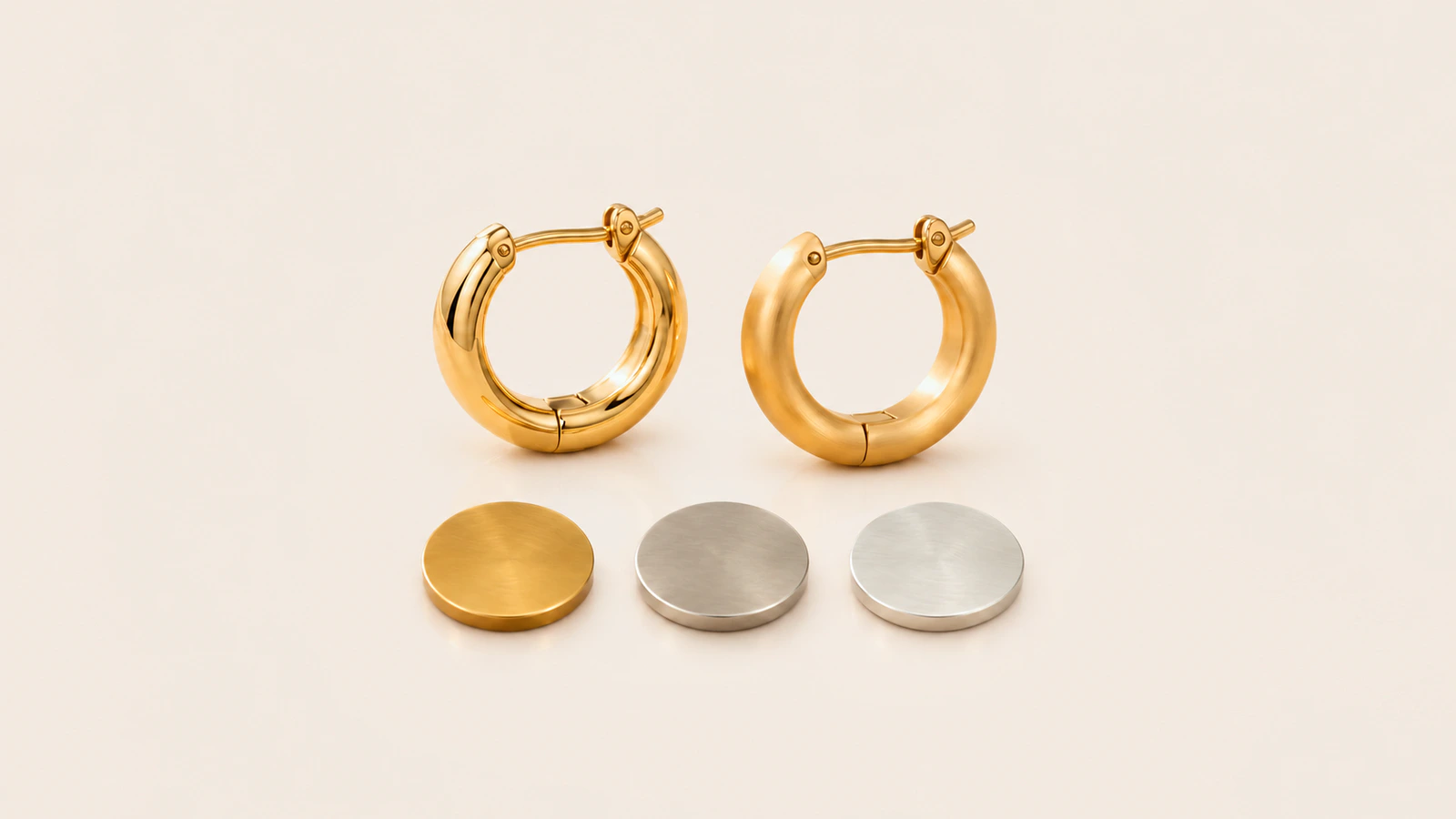
Electroplating lays a metal layer onto the piece from a solution, using an electric current. PVD, short for physical vapor deposition, builds a thin film on the surface inside a vacuum chamber. PVD-coated jewelry is generally harder than jewelry with a basic electroplated layer and usually holds its color longer, but the coating is still a surface film. It can wear through where a piece rubs, such as the inside of a ring band or the edge of a bangle.
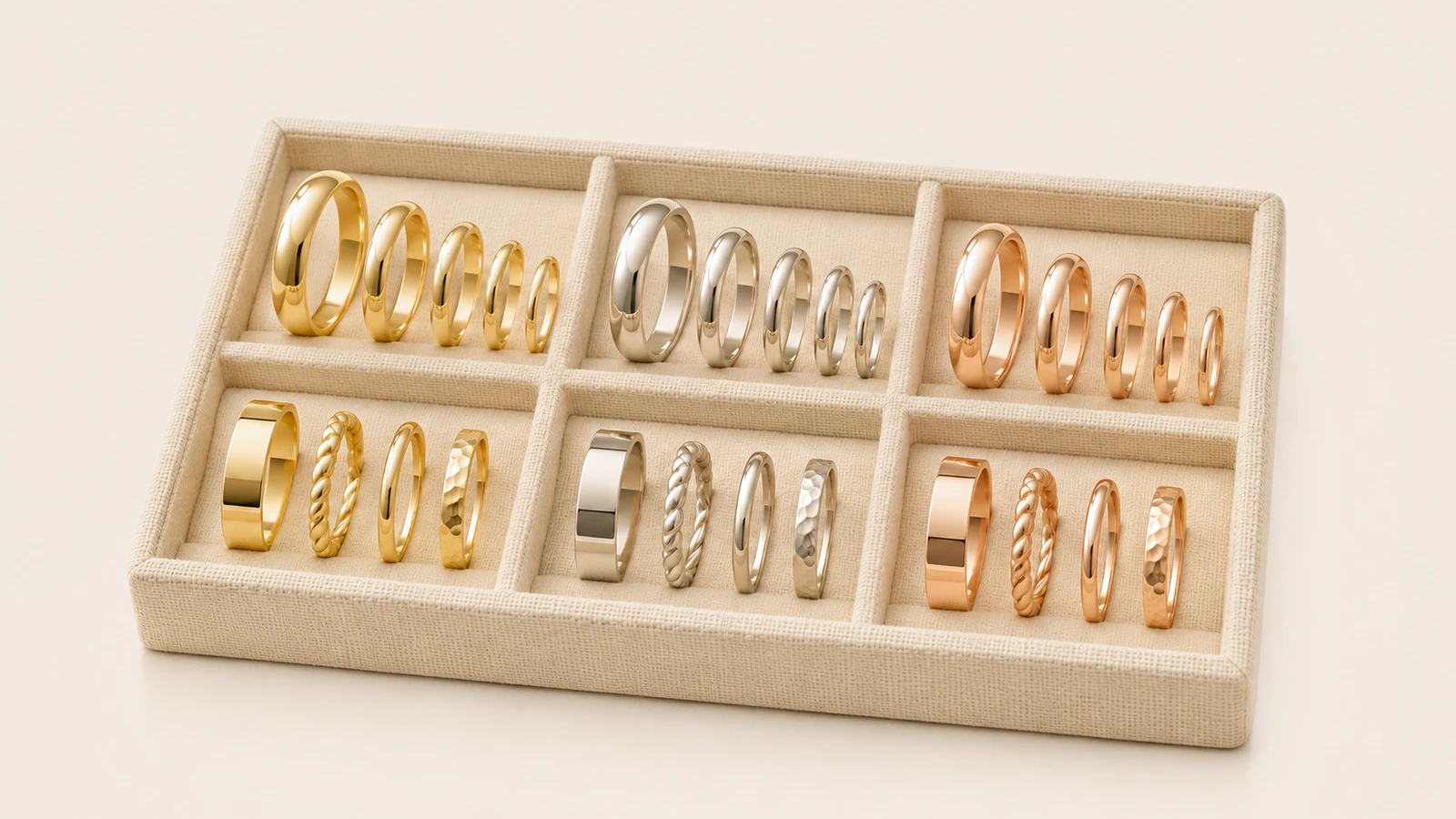
Both methods are offered here, as PVD and electroplating in 14K and 18K gold. Name the finish next to the base metal in the brief, so the quote prices the pair you mean.
How thick is gold plating on jewelry?
Plating thickness runs 0.03–3 µm, depending on the plating method. That is one range across both methods, so it does not tell you what your style will carry. The thickness reading on your own sample is the figure to hold the bulk run to. Thicker plating generally lasts longer on a piece that rubs, and costs more.
Generally, a finish lasts longer on pieces that rub less. Earrings rub less than rings and bracelets, so the same finish can last longer on an earring.
What does it cost?
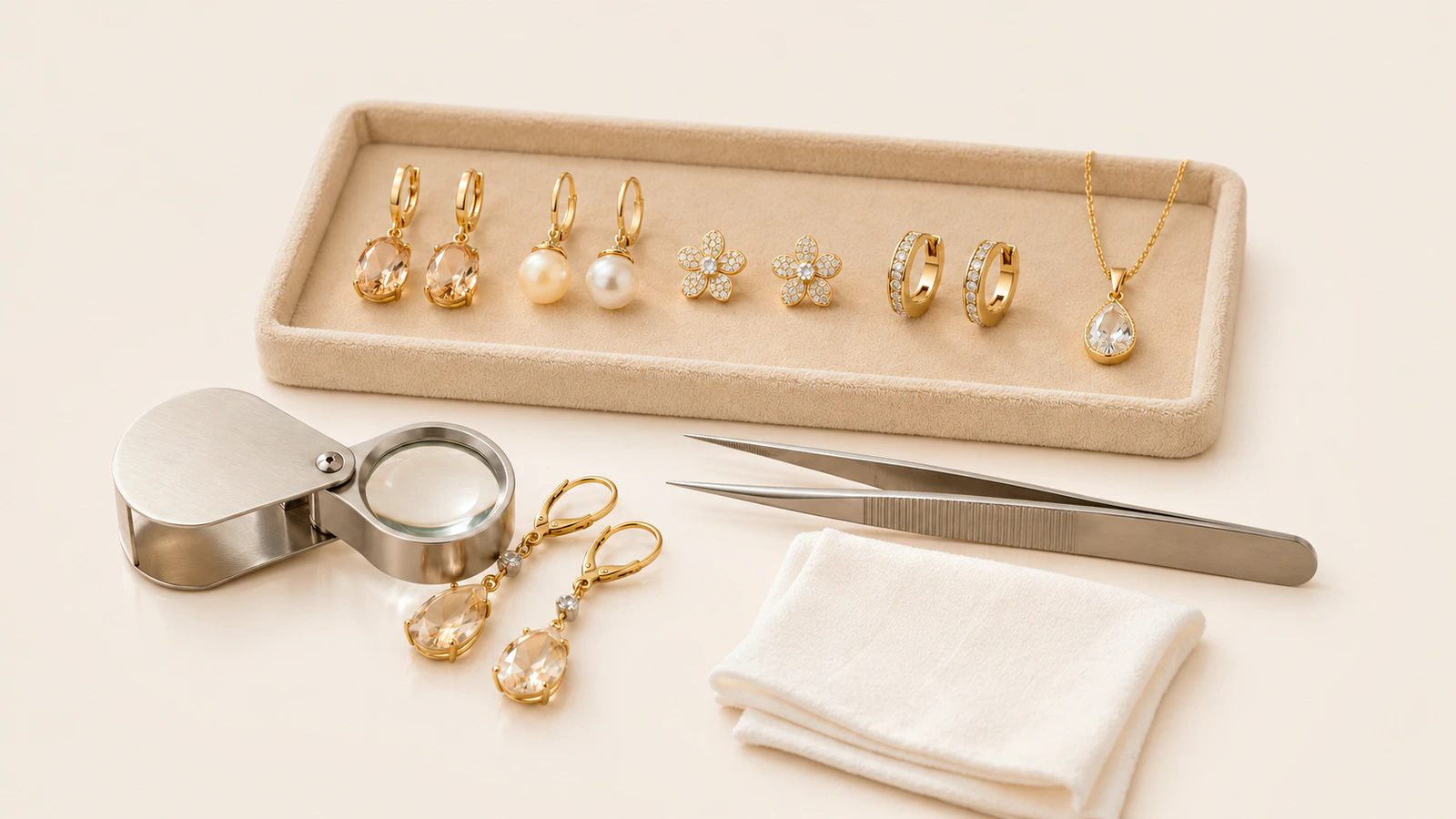
Prices start around US$1.20–2.60 per piece for gold-plated stainless steel earrings at 100 pieces (subject to quote). That range covers that product and that finish; it does not carry over to other metals or finishes. Quotes follow within 24 hours of your brief. To compare metals fairly, send the same design twice and ask for both quotes.
What should you check on the sample?
- The color against your reference. Name the gold tone in the brief, and compare the sample under daylight and under store lighting.
- The thickness reading. Ask for it and compare it with your brief.
- The surface. Run a fingertip along the edges for burrs and scratches, and look at the inside of any ring.
- The test scope. Testing covers nickel release, lead and cadmium in third-party reports, and salt-spray, artificial-sweat and wear tests on plated finishes. Ask which test was run on which finish.
For a sense of how a report reads, one on file, CTT2509060651EN, dated 2025-09-29, pairs a wear simulation with a nickel release test. Its scope is cuff bangle, gold color; REACH Annex XVII nickel release (EN 1811:2023 after EN 12472:2020 wear simulation): PASS. It covers that bangle and nothing else.
Frequently asked questions
Does PVD gold wear off?
A PVD film is thin, and wear removes it gradually at contact points such as a ring band. Thickness and base metal change how fast. Ask for the thickness reading on your sample.
Can stainless steel or 925 silver be left unplated?
Both are commonly sold unplated in their own color. Say so in the brief, so the quote does not assume a finish.
Which gold tone should I name?
The finish options are PVD and electroplating in 14K and 18K gold. Name the tone on every line of the brief, because a tone that differs by one step can look like a color fault when two batches are set side by side.
Next step
Send the design with the base metal, the finish and the gold tone you want, and the quote covers all three. The materials and plating page shows the finishes side by side, and the quality page shows how samples and lab tests are checked.